![]() |
![]() |
Professional Bushcraft, Wilderness Journeys And College-Level Immersion Programs Since 1999 Skill - Journey - Craft - Nature - Culture - Sustainability - Self |
![]() |
![]() |
|
|
5/14/01I had gotten a late start the day before leaving, and spent the night off the road to Rockwood in the back of the pickup. I rose early, anxious to start the trip. After gassing up and getting a cup of coffee in Rockwood, I turned north into the North Maine Woods. Travel on the dirt and gravel roads is slower than on the pavement, and there is always the possibility of a wash-out or hole around the next corner. I arrived at the outlet of Fifth St. John Pond a little before ten AM, and proceeded to unload my gear. The river, at this point just a stream, was clear and cold, rushing past the bank on its way to the Atlantic in the Bay of Fundy. When I had all my gear set, I laid it next to the canoe. After taking care of the pickup, I walked back to the bank and eased the canoe into the water, then loaded my gear aboard. Stepping into the boat, I pushed myself into the current with the pole. My first few minutes were glorious; the sun shined down on me, the air was warming up and the river was briskly moving along. I stowed my pole for a paddle, using it to steer around the many obstacles. Looking back I realize that I was still in the complacent mindset that comes with a long drive. I wasn't alert and on my toes, anticipating the next move. So, lazy and a bit groggy, I paddled down the bending river. At this point, the St. John is a narrow, winding stream with constant quickwater and class 1 rapids. I came around a sharp bend and saw a strainer up ahead. My reactions dulled from the drive, I didn't react quickly enough, and in just a few seconds the bow of my canoe had been caught. The current pushed the rest of the boat quickly around to be trapped by the strainer as well. As this was happening, the last foot or so of my pole became wedged between two branches, bending sharply. Immediately I heard a loud "CRACK" as the top foot was broken off my pole, and at the same moment the canoe tipped and I was thrown into the water. Any sense of post-drive hangover and laziness was immediately gone when I went into the frigid water. It was an instantaneous transition to full alert. I quickly dragged the boat and gear to shore, which was only six feet away. My spare paddle continued on downstream, as did the map I had spent half an hour waterproofing. I dumped the water that had collected in my pack, wrung out my clothes, and loaded everything back in the canoe. I opted to stay in my wet clothes, knowing they would soon be dry with my body heat and the sun. I also carved the end of my now-shorter pole smooth. Back in the days when I played hockey, I liked it when I got checked early in the game. It woke me up and got my attention. The cold water had accomplished the same thing. I got back into the canoe much more alert, and soon located my paddle. I never found the map. Standing in the canoe the rest of the way to the deadwater above Baker Lake, I poled down the quick water and rapids. Once in the deadwater, I paddled the remaining miles to Baker Lake. The wind was blowing hard that day, and it was slow going paddling into the wind the half mile to the campsite at South Baker. Upon arriving and making camp, I had a hot dinner and a walk before climbing into my sleeping bag and sleeping soundly. 5/15/01I awoke to a cold, drizzling rain, which motivated me to stay in the warm cocoon of my sleeping bag for a long while. I packed up camp at 10 AM and finally got on the water at 11 AM. I stuck to the shore of Baker Lake for its entire length. The Ranger station lies where the St. John flows out of the lake, and all parties are requested to check in. I had a good talk with the ranger who was working there. He seemed a bit surprised that I was traveling alone, but not so surprised that he made a fuss about it. We talked about baiting for bear, calling turkey, and trapping as the mist outside turned to rain and the wind started to blow. After about half an hour, we said goodbye and I promised to stop in and see him sometime. I eased the boat into the water, wearing my life-vest (which is warmer than any other vest I've ever worn) under my raincoat; it made me look like a hunchback. Soon I was into the current and drifting downstream. I looked over my shoulder as the ranger station disappeared around the bend, then put my attention back to the water ahead. The cold rain and wind kept up through the afternoon, and my sandal-clad feet were cold, even as I passed Turner Bogan. I planned to get out of the rain and warm-up in the cabin at Flaw's Bogan. When I came around a bend and Flaw's Bogan stood before me, my teeth were chattering and my hands were cold and raw. I landed on the bank, then went inside and sat at the white picnic table as I rubbed some warmth back into my feet. Looking out the window across the bend and upriver, I saw the size of the raindrops increasing by their rings on the water. I had a snack, put on dry wool socks, then jotted a few things down in my journal. I spent the rest of the afternoon and evening at the cabin. It was easy to imagine a small garden in the sun and a bunch of traps hung-up under the eaves. 5/16/01I awoke to another day of rain and wind, and as I paddled the deadwater below the bogan I could feel the fatigue creeping into my muscles. The combination of the cold, the rain, and the headwind worked to sap my energy. Around midday I was rhythmically dipping my paddle and looking downstream when a coyote came out of the brush on the bank of the river to my left. He trotted downstream along the bank for 30 yards before again darting into the brush. I smiled at him, and no longer noticed the rain, the cold, or the headwind. I paddled for eight hours, stopping for the night at Burntland Brook. I had originally planned to camp at 9 Mile Bridge. I had wanted to poke around some since I read Helen Hamlin's book of the same name last winter. But, it was getting late, I was tired, and the campsite at Burntland Brook was set in an Aspen grove with the scent of Aspen filling the air. It is a scent that stirs me deeply, reminding me of Alaska, northern Maine... in essence, the north. Along with Spruce and Fir, it conjures up images of the boreal forest. But while its needle-leaved neighbors delight our noses all year, the glorious scent of the Aspen lasts only through spring. "So I sit here, my belly full, watching the river roll past, listening to the water run over the rocks and the song of a white-throated sparrow, under an overcast sky. My camp is pitched and my body is tired; the good kind of tired that comes from a day of exertion. Across the river a woodpecker searches for insects. Other birds call, and a mosquito, the first I've seen, buzzes past." 5/17/01I was up early the next morning, and had a meal in my belly and my gear in the canoe early. It had rained through the night, and was drizzling as I pushed away from shore. By midday the rain had stopped, and the sun began to peek through the clouds. It was a welcomed friend to have along, and I could feel it on my skin, energizing me. As I passed 9 Mile Bridge, I waved to a group of campers who were having breakfast. They were the first people I had seen other than the ranger. As I continued downstream I paddled through the big deadwater, then past Seven Islands and Simmons Farm. It was turning into a long day. I had covered a lot of distance. As I came around the bend into Basford Rips, I had to give two strong strokes to get around a big rock that sat squarely before me. After long stretches of deadwater, it got my blood pumping quickly again. I stopped above the Big Black Rapids and had something to eat. I also checked and secured my gear. Big Black rapids are not long or overly difficult, being class 2. They are remote, though, and an upset resulting in a damaged canoe or loss of gear could turn out to be an inconvenience or worse. I poled around the bend on the right side of the river, then slowly eased my way down the first drop before stowing the pole and grabbing the paddle. I steered down through the remaining rapids, then past where the Big Black river enters on the left. Feeling good, I decided to keep going, as I was having a glorious day and didn't want it to end. Eventually I stopped at the Boom Chain campsite around dusk, had something to eat, and fell into a deep sleep. 5/18/01
I awoke to a thick blanket of mist on the river. I couldn't see more than 20-feet into it. I could hear some rapids downstream, so I figured the prudent thing to do was to lay up until the visibility improved. Eventually, the mist cleared enough to see 150 feet or so, and I was once again headed downstream. Soon after I was on the water the mist burned off, and the blue sky and morning sun foretold a perfect spring day. The series of short rapids and quick water stretches kept things exciting, and I knew that Big Rapids lay ahead in the distance. It is obvious that you're nearing the town of Dickey when you begin to see houses along the riverbank. I continued on, around the bend to the left that leads into the Big Rapids. Just above the rapids is a takeout point. I stopped here, got out of the canoe and had a drink of water. Big Rapids is described by the AMC guide to Maine Rivers as "2 miles of class 3 whitewater", and is the stretch of river most worthy of concern for safety and gear. Just below the rapids lies the Dickey bridge, near which my pickup was parked(after having been shuttled). As I was standing there, a group of several cars pulled up. I said hello and made small talk, finding out that they were an AMC club and were coming up to run the rapids again. After a bit more discussion, I told them that if they wanted a ride back to their cars I'd be happy to give them one. They thanked me, and I helped them carry their canoes down the short trail to the water. I waited for them to go ahead of me, since they were all paddling and I was planning to pole most of the way down the rapids, which is usually slower. I stuck to the left bank, going slow, until the river swung around to the right. Here the water sped up, and I stowed the pole and paddled over the drop. Once over it, I again reached for the pole, and slowed myself down as I looked at the next (and last) drop. I let the river pick my route for me, pulling me toward the place of the most water, and once again stowed the pole in favor of the paddle. As I came out of the rapids, I continued on to Dickey bridge, while the AMC paddlers stopped to take some pictures with the rapids as a background. It's about a mile further to the bridge, and I paddled it standing in my canoe. As I came to the pullout point, I lugged my canoe far out of the way to make room for the folks who would be arriving soon. Then, I walked upstream fifty yards and jumped into the main current, floating easily on my back as the bank rushed by. After retrieving my pickup, I drove them up the road, then went back and got the rest of my gear and the canoe. I stopped at the Dickey store on my way out of town, where I bought a cup of coffee for the long ride home.
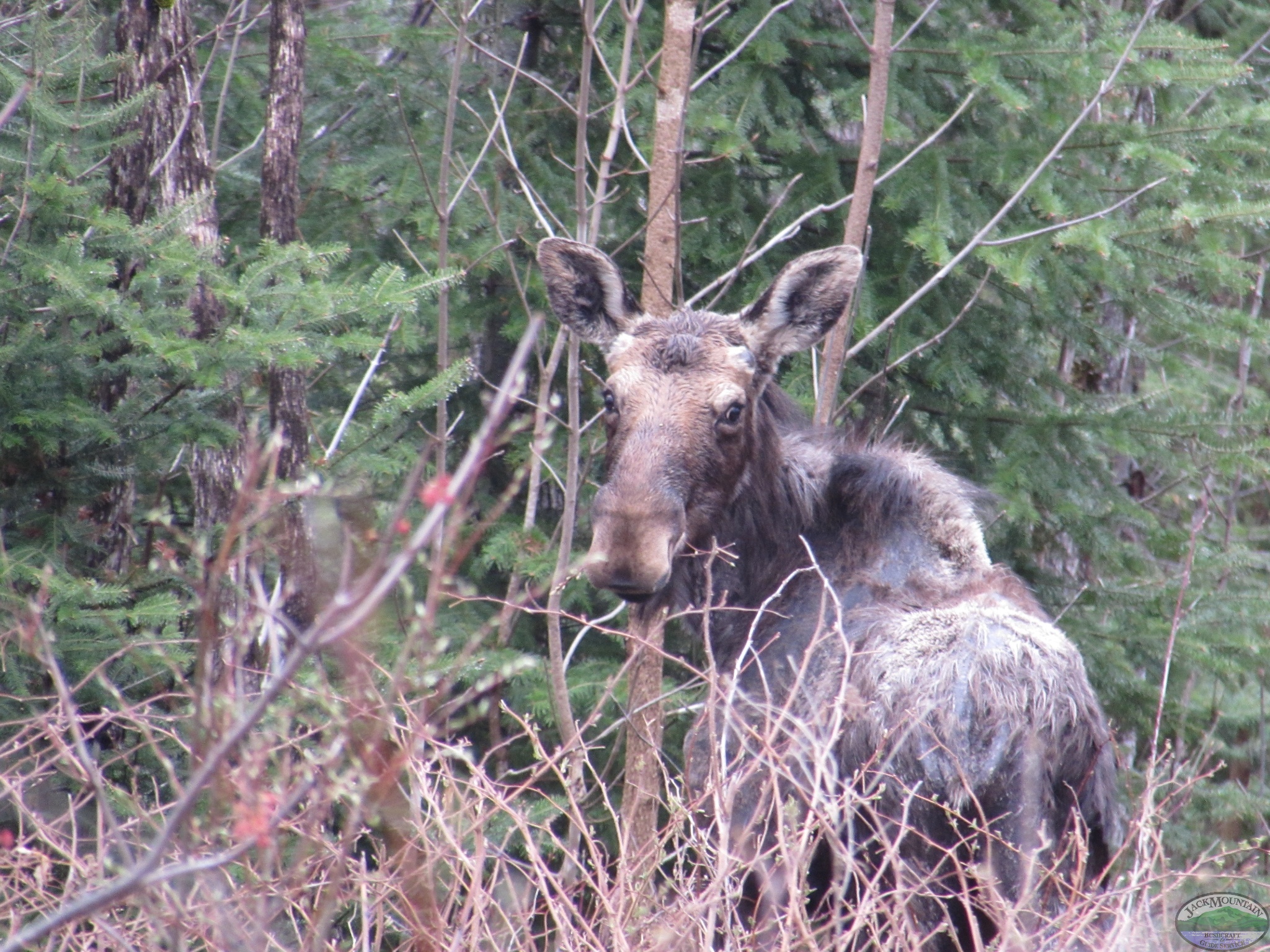
Note: The photographs on this page were taken on a previous trip on the St. John, not on the trip described in the journal. No photographs were taken on the trip described.
|
[ back to top ]
|